
FWB Dating & Local Meet: Lumi
Raja EmranSocial
4.51.15K Reviews
- Version
- 1.1.5
- Installs
- 100.00K
- Age Rating
- Mature 17+
Screenshots
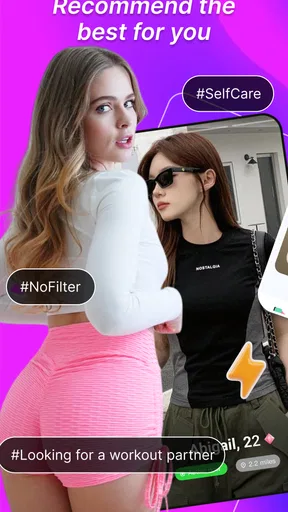




Our Review of FWB Dating & Local Meet: Lumi
 Analysis by Appyee
I approached Lumi as a social app for people who want to discover nearby connections rather than simply scroll through a broad, anonymous feed. Its basic promise is easy to understand: browse, bond, and meet people with similar interests in your area. After spending time with it, my impression is that its appeal depends less on having endless options and more on whether you value local discovery, open-minded conversations, and a more mature social environment.
Lumi is free to download, although it includes optional purchases ranging from $4.99 to $79.99 per item. It is published by Raja Emran and carries a Mature 17+ rating, so I would not treat it like a general-purpose friendship app for every age group. The current release is version 1.1.5, and it runs on Android devices using Android 6.0 or later. Those details matter because the experience is aimed at adults who are comfortable making social connections with people they may eventually meet offline.
How Lumi feels in its current state
The first thing I noticed is that Lumi is more useful when I approach it with a clear reason for being there. “Meeting people nearby” can mean many things: finding someone to talk with, discovering a casual social connection, or looking for a relationship with a more relaxed starting point. If I open the app without knowing what kind of interaction I want, the browsing experience can feel less focused. If I decide beforehand whether I am looking for conversation, company, or a local connection, it becomes easier to judge profiles and decide where to spend my attention.
That local angle is the app’s strongest identity. Many social platforms are built around popularity, large communities, or content that can come from anywhere. Lumi feels more relevant when distance and shared interests matter. A person who has just moved to a new neighborhood, for example, may find more value here than in a platform dominated by established friend groups. The app can also suit someone who prefers an introduction through a social service rather than approaching strangers in public.
I would describe the tone as adult-oriented rather than universally casual. The Mature 17+ classification sets an important expectation before installation. Parents looking for a safe app for younger teenagers should skip it, and adults should still use normal judgment when deciding how much personal information to reveal. The age label does not remove the need for caution; it simply tells me that Lumi is designed for a more mature audience.
Its public reception is encouraging. Lumi holds a 4.6 average from around 14 thousand ratings, with more than 700 written reviews, and it has passed 100 thousand installs. I read those figures as evidence of a meaningful early audience rather than proof that every local area will feel equally active. A social app can be lively in one city and quiet in another, so I would judge it after checking the quality and relevance of nearby profiles instead of relying only on its overall store presence.
A practical way to use it without wasting time
My preferred approach is to treat the first session as a filtering exercise. I would look for signs that a profile belongs to a real person with a compatible reason for using the service, then begin with a short, specific message. A comment connected to a visible interest is more useful than a generic greeting because it gives the other person something easy to answer. This also exposes mismatched intentions early, which is especially important in a mature social setting.
One realistic scenario is someone who has relocated for work and wants to meet people nearby without committing to a formal club or event. They could use Lumi in the evening to browse local profiles, identify a few people whose interests overlap, and start with conversation before considering an in-person meeting. I would keep the first meeting in a busy public place, tell a friend where I am going, and avoid sharing my home address or routine too soon. Those steps are not flaws in the app; they are sensible habits for any service that connects strangers.
A less obvious benefit of this workflow is that it prevents the app from becoming a passive catalogue. Local social tools are most useful when I turn browsing into a small, deliberate process: decide what I want, inspect compatibility, send a thoughtful opening, and move on if the exchange feels forced. That is more efficient than sending the same message to many people and hoping one conversation develops.
What the version information tells existing users
The current version, 1.1.5, suggests that Lumi is still in a relatively early stage of its product life. It was released on December 25, 2024, so I see the present build as part of an actively developing experience rather than a platform with years of accumulated maturity. That does not make it unusable. It does mean I would keep expectations realistic around polish, local activity, and the way the service may evolve.
For a new user, the current build is the version that matters most: it is the release to install and evaluate today. For someone already using Lumi, version changes are worth treating as practical rather than cosmetic. A newer build can alter how smoothly browsing feels or how consistently conversations behave, even when the central idea remains the same. I would update when possible, then spend a few minutes checking familiar parts of the app instead of assuming that an update has changed nothing important.
The version number alone does not tell me that Lumi has introduced a particular feature, redesigned a specific screen, or solved a known problem, so I would not make those claims. What I can say is that the service has moved beyond a purely experimental presence: it has a substantial enough audience to produce thousands of ratings and a clear current release to evaluate. That places it in an interesting middle ground—more established than an empty new download, but not necessarily as predictable as the biggest social networks.
Existing users may benefit from staying selective as the audience grows. A larger pool can improve the chance of finding someone nearby, but it can also increase the amount of time spent sorting through profiles that do not match. I would revisit my own profile whenever my goals change, because a vague presentation makes local matching harder. Clear wording about the kind of connection I want is likely to save more time than simply browsing for longer.
Where Lumi compares well with familiar alternatives
Compared with a general social network, Lumi has a narrower purpose. A mainstream network is usually better for keeping up with people I already know, following public content, or joining broad interest communities. Lumi makes more sense when the goal is to discover new people nearby. I would not replace a conventional network with it for family updates or long-term community management; the two types of service solve different problems.
Compared with a large dating platform, Lumi’s local-social framing may feel less rigid for someone who wants to begin with shared interests or companionship. A dedicated dating service may be the better choice for users who want detailed relationship filters, a clearly defined romantic audience, or a highly structured matching process. Lumi is more appealing when I want the possibility of meeting someone without forcing every interaction into one narrow label from the start.
Compared with event or meetup tools, Lumi is more convenient for an initial one-to-one connection, while event platforms are often stronger for group activities with a visible schedule and public context. If I want to attend a language exchange, sports session, or organized gathering, an event-focused service may provide better structure. If I want to start a private conversation with a nearby person who seems compatible, Lumi is the more natural fit.
There is also a trade-off against anonymous chat apps. Anonymous services can make it easy to begin talking, but they often provide less confidence about who is on the other side. Lumi’s local emphasis gives conversations a more tangible context, yet that same context means I need to protect personal details carefully. I would choose Lumi over anonymous chat when I want a connection that could become real-world, but I would choose anonymous spaces when privacy is my highest priority and meeting offline is not part of the plan.
The friction I would want new users to understand
The biggest limitation is not necessarily a missing button or a confusing screen; it is the natural difficulty of building a healthy local network. The app can present opportunities, but it cannot guarantee that people nearby share my interests, reply promptly, or want the same type of relationship. Someone living in a smaller town may find the selection less useful than someone in a densely populated area. That is a structural challenge for any location-based social product.
The free entry point is welcome, but the presence of in-app purchases means I would pay attention before spending money. Optional items priced from $4.99 to $79.99 each cover a wide range, and I would not assume that purchasing something automatically improves the quality of a conversation or makes a poor match worthwhile. I would use the free experience long enough to decide whether the local audience is relevant before considering any paid option.
Another point of friction is emotional energy. Browsing people with the intention of meeting them can become tiring when conversations stop suddenly or when interest is not mutual. I recommend setting a small time limit for each session and focusing on a few promising interactions instead of treating every profile as an obligation. This is a useful habit in Lumi because local relevance can tempt users to keep searching even when the current conversations are already enough.
Privacy also deserves active attention. I would avoid posting precise workplace details, daily travel patterns, financial information, or anything that makes my home easy to identify. I would move slowly from in-app conversation to a public meeting and leave immediately if someone pressures me to share more than I want. The mature audience and local focus make these boundaries particularly important, not less important.
Who should try it, and who should choose something else
I think Lumi is a good candidate for adults who want to meet like-minded locals and are willing to participate rather than simply consume content. It may be especially useful for newcomers to a city, people rebuilding a social circle, and users who prefer a flexible social introduction over a formal dating questionnaire. It also suits someone comfortable with a free app that offers optional purchases but who can evaluate those purchases calmly.
I would be more cautious about recommending it to anyone who needs a very large, consistently active audience in every location. The overall install figure is healthy, but it cannot guarantee strong activity in a particular neighborhood. Users who want scheduled group events, professional networking, anonymous conversation, or highly specific romantic filters may get better results from specialized alternatives.
I would also skip it if I were unwilling to communicate clearly about intentions. Local social apps work poorly when users expect the service to guess what they want. A short profile and vague messages can create confusion, especially when one person is seeking friendship and another is looking for something more intimate. Lumi can support discovery, but the responsibility for honest communication still belongs to the people using it.
What I would watch as Lumi develops
Because version 1.1.5 belongs to a young product, I would watch how the service handles growth. The important question is not simply whether more people install it, but whether local users continue finding relevant conversations. I would look for signs that browsing becomes more efficient, that profiles remain useful, and that the experience stays comfortable as the audience expands.
I would also pay attention to how clearly Lumi communicates the purpose of its optional purchases. A free social app can be perfectly worthwhile, but users should be able to understand what they are paying for before committing. My advice is to judge any purchase by a specific need rather than by impatience: if the free experience does not produce relevant local connections, spending more may not solve the underlying problem.
Finally, I would watch the balance between openness and safety. Lumi’s appeal comes from making new local connections possible, while its responsibility is to help users approach those connections thoughtfully. Clear expectations, sensible boundaries, and a respectful community will matter more to long-term success than a crowded browsing screen.
My final view is positive but measured. Lumi gives adults a straightforward way to look beyond their existing circle and start conversations with people who may be nearby and like-minded. Its free access, current audience, and clear local focus make it worth trying, especially for someone who has recently moved or wants a different route into social discovery. I would not install it expecting guaranteed matches, instant friendships, or a replacement for every other social service.
The best reason to try Lumi is its local-first possibility, not the promise of effortless connection. I would use it deliberately, protect my privacy, test the free experience before considering purchases, and compare the results with what I actually want from a social app. With those expectations, it can be a useful addition to an adult social toolkit—and if my priority is organized group activity, anonymity, or highly structured dating, I would choose a more specialized alternative instead.
Privacy and Permissions
See what permissions an app requests and how it handles your data.
- Location
- approximate location (network-based), precise location (GPS and network-based)
- Phone
- read phone status and identity
- Photos/Media/Files
- read the contents of your USB storage, modify or delete the contents of your USB storage
- Storage
- read the contents of your USB storage, modify or delete the contents of your USB storage
- Camera
- take pictures and videos
- Microphone
- record audio
- Wi-Fi connection information
- view Wi-Fi connections
- Device ID & call information
- read phone status and identity
- Other
- view network connections, control flashlight, full network access, change your audio settings, control vibration, prevent device from sleeping, Google Play license check, read Google service configuration
Verdict
Strengths of FWB Dating & Local Meet: Lumi
- Simple profile setup makes it easy to start meeting nearby people.
- Location-based discovery helps find potential matches in your area.
- Private messaging supports getting to know matches at your own pace.
- The app focuses on casual connections and flexible dating preferences.
- Useful for users seeking local friendships or nontraditional relationships.
Limitations of FWB Dating & Local Meet: Lumi
- The local user pool may be small outside major cities.
- Some features may require a paid subscription or in-app purchases.
- Location-based matching can raise privacy concerns for cautious users.
- Match quality depends heavily on how actively people use the app.
- Profiles may vary in detail, making intentions unclear at times.
Similar Picks in This Category
View All
Meta Platforms, Inc.4.6

Instagram4.0

Likee-Live, Chat & Party Games
Likeme Pte. Ltd.4.4

Facebook Lite
Meta Platforms, Inc.4.5

TikTok - Videos, Shop & LIVE
TikTok Pte. Ltd.4.0

Moj: Free Short Drama & Reels
ShareChat4.1
Frequently Asked Questions
What is FWB Dating & Local Meet: Lumi?
FWB Dating & Local Meet: Lumi is a dating and social discovery app designed for adults interested in meeting nearby people and exploring casual, friendship-based, or friends-with-benefits connections. Its focus is on local matching and direct communication, allowing users to create a profile, browse potential matches, and decide whether they want to pursue conversation or an in-person meeting at their own pace.
Is Lumi suitable for serious relationships or only casual dating?
Although Lumi is primarily associated with casual dating and friends-with-benefits arrangements, users may have different intentions when joining the platform. Some people may be looking for new friends, relaxed conversations, or a more committed relationship. It is important to communicate your expectations clearly in your profile and messages, because the app cannot guarantee that every match will want the same type of relationship.
Is FWB Dating & Local Meet: Lumi free to download and use?
Lumi can generally be downloaded without an upfront charge, but some features may be limited unless you purchase optional subscriptions or in-app upgrades. Depending on the current version, premium tools may include enhanced visibility, additional interaction options, or other conveniences. Before subscribing, review the pricing, renewal terms, and cancellation instructions shown in the app or on the relevant app store.
How can I stay safe when meeting someone through Lumi?
Use the app’s messaging features to get to know a person before sharing private information or agreeing to meet. Avoid sending money, financial details, passwords, or intimate content to someone you have not verified. For a first meeting, choose a busy public location, tell a trusted person where you are going, arrange your own transportation, and leave immediately if the situation feels uncomfortable.
What should I do if I encounter a fake, abusive, or inappropriate profile?
If a user behaves abusively, sends unwanted content, misrepresents their identity, or pressures you into anything, stop communicating and use Lumi’s available block and report tools. Save relevant evidence when appropriate, such as messages or profile details, and do not attempt to confront the person offline. You should also review the app’s community guidelines and contact its support team if the issue is serious or unresolved.
